
 Russian
Electric forklifts are no longer synonymous solely with "light-duty indoor" operations. They now offer a comprehensive range of capacities—from agile 1-ton models that weave through racking aisles to 10-ton units capable of lifting heavy castings—covering virtually every operational scenario. The following breakdown by tonnage helps you quickly identify the right model for your needs.
I. 1–2 Ton Class: Three-wheel and short-wheelbase models—the top choice for space-constrained environments
The core advantage of this class lies not in raw lifting power, but in maneuverability and precision.
Three-wheel models (CPDS12/16/20): Feature a minimum turning radius of just 1,590 mm and a width of 1,100 mm, allowing for easy maneuvering in narrow racking aisles.
Short-wheelbase models (CPD12/16/20): Boast a wheelbase as short as 990 mm and an overall length of only 2,710 mm, enabling them to fit into standard passenger elevators.
Rated capacity: 1.2–2 tons; ideal for high-frequency handling operations in tight spaces.
Typical applications: Cold chain warehouses, urban distribution centers, and inter-floor transfers in multi-story warehouses.
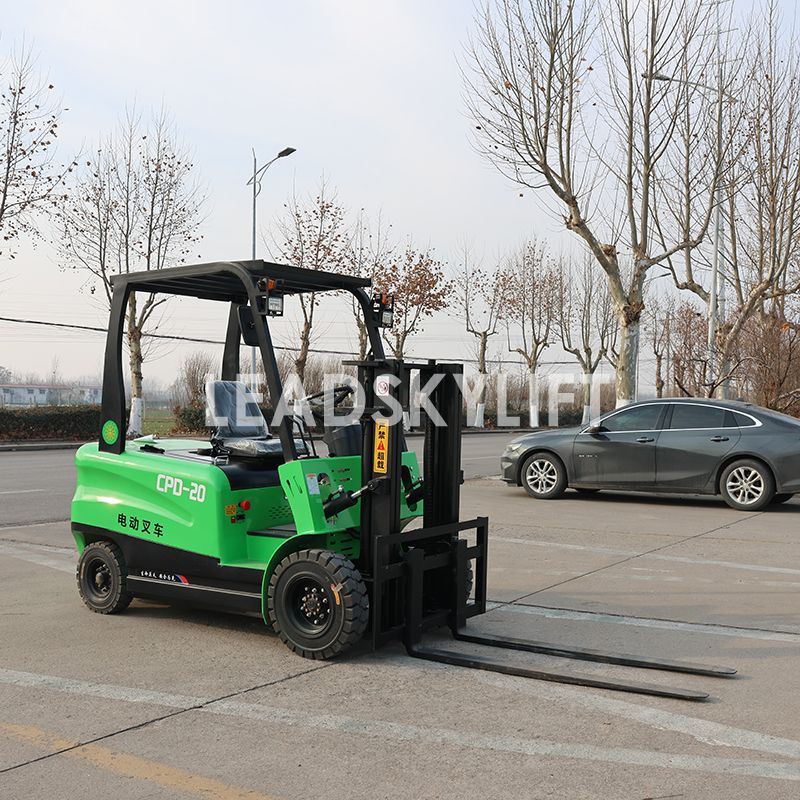
II. 2.5–3.5 Ton Class: The "Golden Tonnage" for general-purpose operations
This segment sees the highest market demand and serves as the primary battleground where electric and diesel forklifts compete head-to-head.
Key specifications: Drive motor 7.5–10 kW; lift motor 8–12 kW; travel speed (fully loaded) ≥ 12 km/h.
Gradeability: 15%—sufficient to handle ramps within factory premises.
Selection details: Options for both short and long wheelbases are typically available within this tonnage class; short-wheelbase models offer greater agility, while long-wheelbase models provide superior stability for heavy loads.
Typical applications: Machining workshops, automotive parts manufacturing plants, and logistics distribution centers.
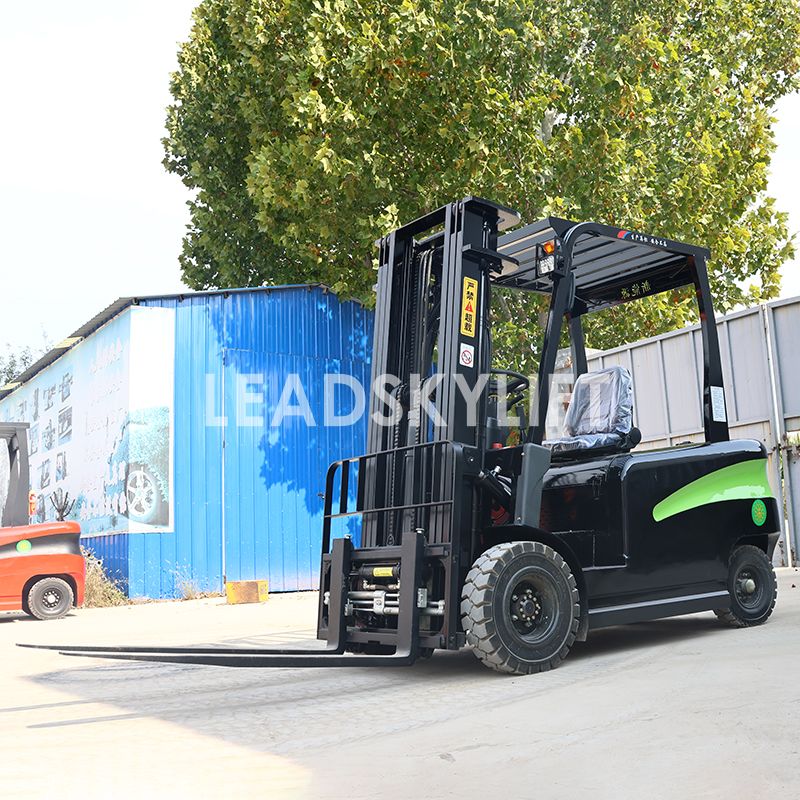
III. 4–5 Ton Class: Heavy-duty platforms for industrial applications
Once capacity exceeds 3.5 tons, the vehicle's design logic undergoes a fundamental shift, featuring comprehensive upgrades to the chassis, hydraulic systems, and heat dissipation capabilities. Platform Upgrade: Wheelbase ≥ 1,880 mm, vehicle width 1,360 mm, and tires upgraded to the 250-15 class.
Voltage Leap: Shift from 60V/72V to an 80V high-voltage platform, supporting sustained high-power output.
Battery Options: 80V/400Ah lead-acid or 80V/300Ah lithium-ion; the lithium option supports fast charging and opportunistic charging.
Application Scenarios: Handling of metallurgical ingots, jumbo paper rolls, and prefabricated construction components.
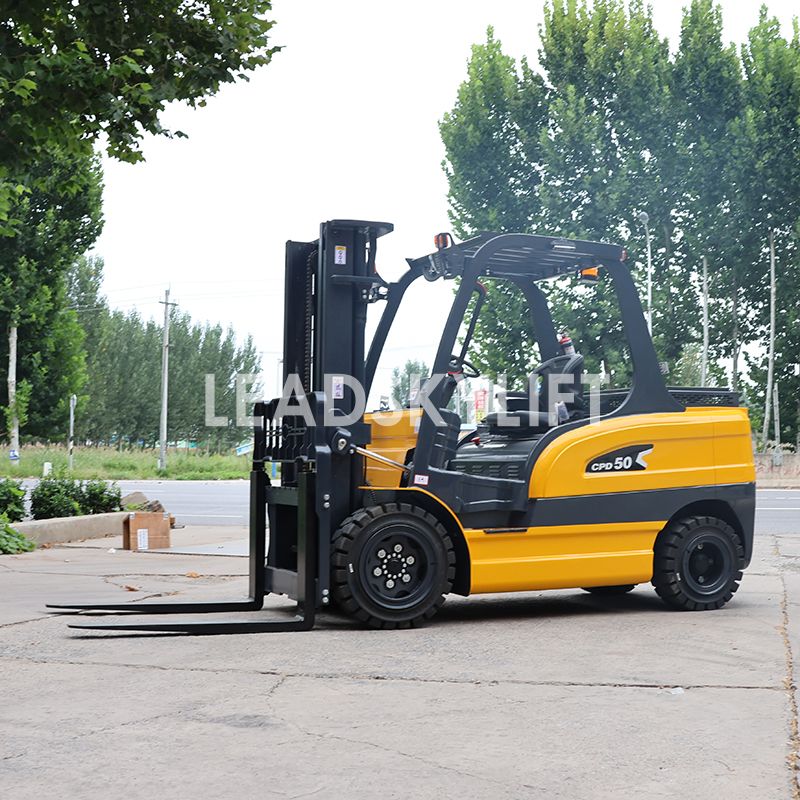
IV. 7–10 Ton Class: Flagship Models with Ultra-High Tonnage
Models exceeding 7 tons remain a rarity in the industry, demanding exceptional standards for chassis strength, dual-motor coordination, and thermal management. Model Rated Load Drive Motor Lift Motor Curb Weight Turning Radius
CPD70Z 7 tons 30 kW 25.4 kW 9.6 tons 3180 mm
CPD80Z 8 tons 35 kW 25.4 kW × 2 12.0 tons 3280 mm
CPD100Z 10 tons 35 kW 25.4 kW × 2 13.2 tons 3460 mm
Drive Layout: 4x2 configuration (4 drive wheels); offers superior traction for heavy-load starts and ramp climbing.
Ground Clearance: Minimum ground clearance of 220 mm; clearance under the mast (at full load) is 125–130 mm.
Applications: Iron and steel metallurgy, wind power equipment, transformer manufacturing, port heavy-container yards.
Selection Tips: Four "hidden variables" beyond tonnage
Variable Description
Load Center Distance Load capacity is based on a specific center distance (500 mm or 600 mm); safe load capacity decreases if the load's center of gravity shifts forward.
Retracted Mast Height High masts offer greater lift height but increase the vehicle's overall height when retracted; be mindful of height-restricted areas.
Minimum Ground Clearance Clearance below 120 mm risks chassis scraping on speed bumps or ramps; prioritize heavy-duty platforms with higher ground clearance.
Charging Infrastructure High-tonnage models have large battery capacities; verify that the site's grid capacity supports simultaneous fast charging for multiple units.
One-sentence selection advice
First, measure site data (aisle width, gradients, height limits, grid capacity); then, determine the tonnage range; finally, compare differences in wheelbase and battery configurations for the selected tonnage.
Tonnage is merely the starting point; matching the equipment to the site is where efficiency begins.
Note: The parameters in this document are based on our current product technical manual; actual specifications depend on the final selected configuration.