
 Russian
In warehousing, logistics, construction, and specialized operations, the forklift serves as a core material-handling tool; selecting the right model directly impacts operational efficiency and costs. When choosing between the three main categories—electric, internal combustion (IC), and rough-terrain forklifts—users must weigh multiple factors, including the operating environment, load requirements, usage frequency, and total cost of ownership. This article outlines the selection logic based on standard industry technical specifications.
I. Electric Forklifts: The Top Choice for Indoor, Eco-friendly, and Precision Operations
Powered by batteries, electric forklifts offer advantages such as zero emissions, low noise levels, and precise control. They are widely used in indoor environments with strict environmental standards, such as warehouses, supermarkets, and facilities handling food or pharmaceuticals.
Key Advantages:
Eco-friendly and Quiet: No exhaust emissions, making them suitable for enclosed spaces; noise levels are significantly lower than those of internal combustion engines, improving the operator's working environment.
Low Operating Costs: Electricity costs are lower than fuel costs, and electric motors require little maintenance—eliminating the need for oil changes, filter replacements, etc.
Smooth Control: Electronic control systems enable stepless speed regulation and excellent inching capabilities, making them ideal for precision stacking of goods.
Limitations to Consider:
Range and Charging: Standard battery capacities (e.g., common 60V/70Ah–86Ah ranges) support moderate-intensity work; however, prolonged heavy-load operations or multi-shift schedules require spare batteries or fast-charging facilities.
Gradeability and Surface Adaptability: Fully loaded gradeability is typically around 13%–15%, and the minimum ground clearance is approximately 9.5 cm; they are best suited for flat, paved surfaces.
Suitable Scenarios: Indoor warehouses, cleanrooms, low-level racking areas, and intermittent light-to-medium load operations.
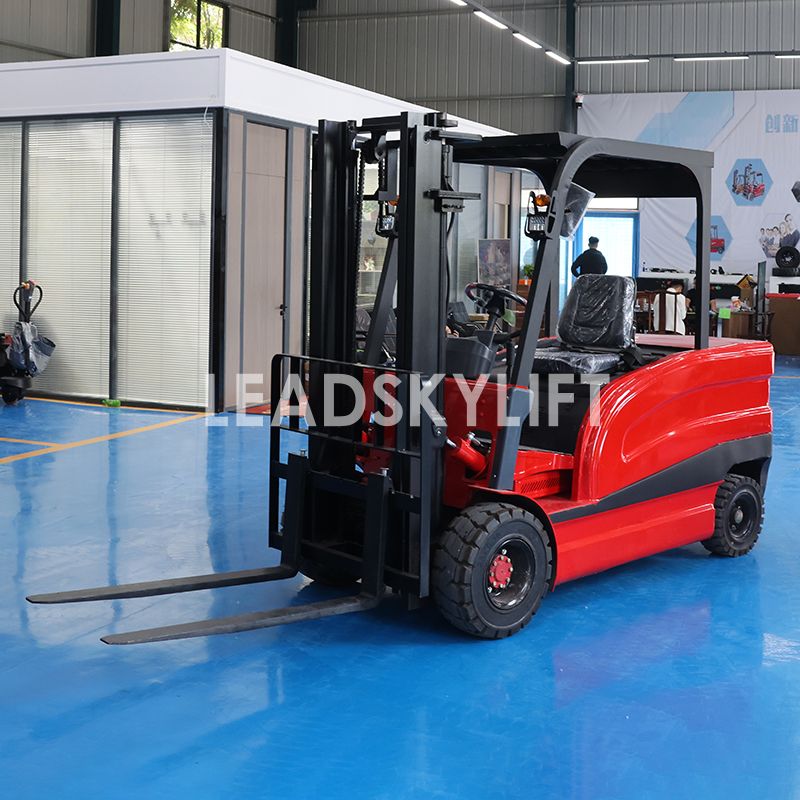
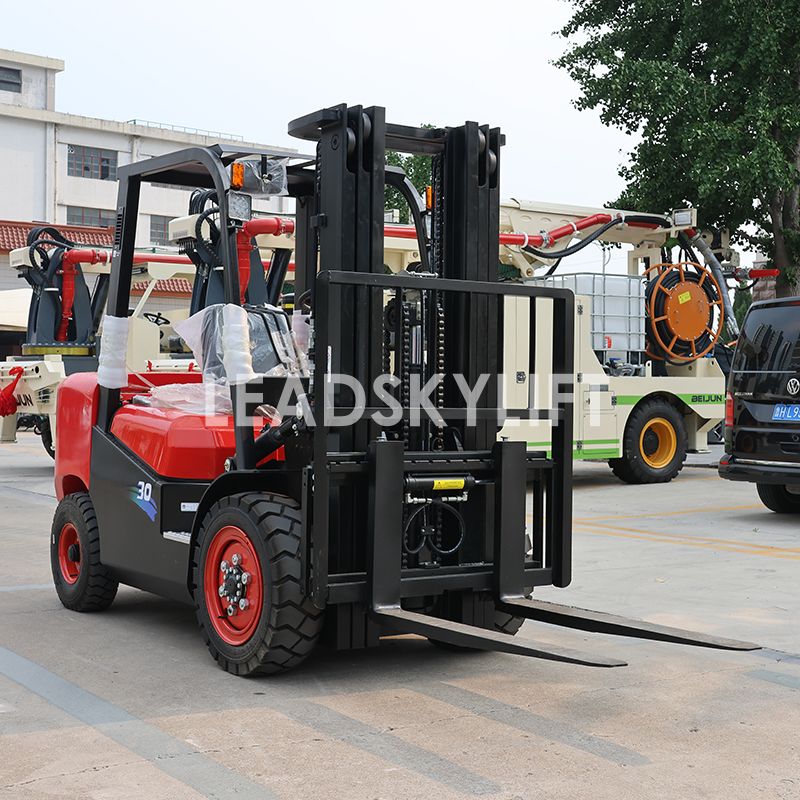
II. Internal Combustion Forklifts (Diesel): Reliable Power for Heavy-Duty Outdoor and Long-Duration Operations
Powered by internal combustion engines (predominantly diesel), these forklifts feature high power output, long operating range, and convenient refueling. They dominate outdoor applications such as ports, freight yards, and construction sites. Key Advantages:
Powerful Performance: Engine power ranges from 36 kW to 42 kW (or higher), with a rated lifting capacity of 2.5 to 3.5 tons. It offers a full-load gradeability of 16%–17%, enabling it to handle significant inclines.
High Continuous Operational Capability: Refueling takes only minutes, eliminating range anxiety; it is well-suited for multi-shift, high-intensity, continuous work cycles.
Good Mobility: Equipped with pneumatic tires (e.g., 12-16.5 or 14-17.5 specifications) and a minimum ground clearance exceeding 220 mm, it adapts well to uneven terrain.
Limitations to Consider:
Operating Costs: Fuel consumption and periodic maintenance costs for the engine and transmission are relatively high.
Emissions and Noise: Not suitable for use in enclosed or poorly ventilated environments; must comply with local emission regulations.
Suitable Applications: Outdoor storage yards, transport terminals/docks, loading and unloading of construction materials, and long-distance horizontal transport.
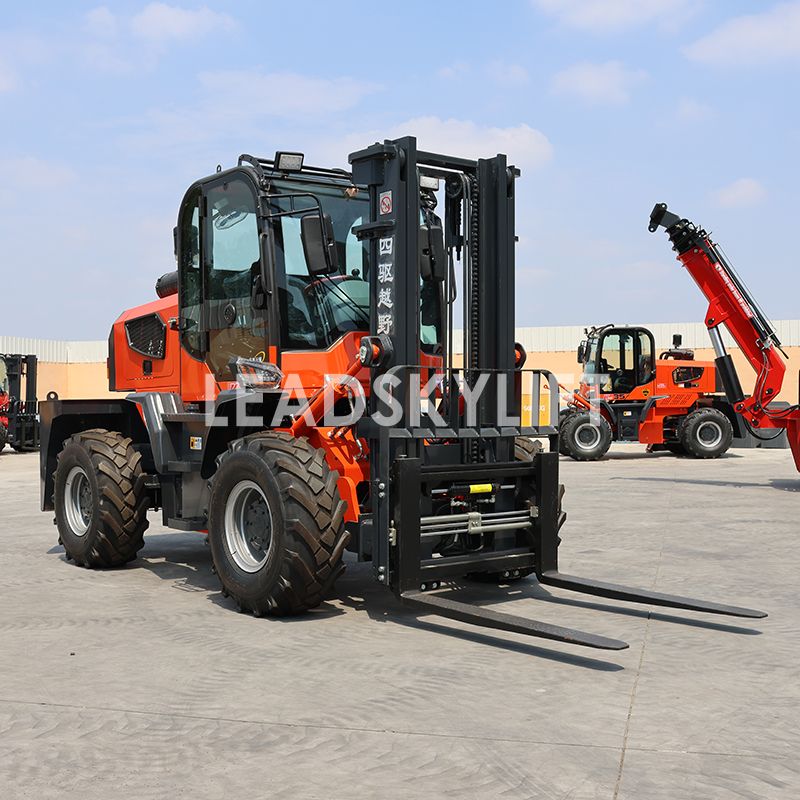
III. Rough-Terrain Forklifts: Specialized Tools for Complex Terrain and Extreme Conditions
Rough-terrain forklifts are designed specifically for unpaved surfaces such as mud, sand, gravel, and steep slopes. Featuring reinforced chassis, tires, drive systems, and lifting mechanisms, they serve as specialized equipment for mines, farms, forestry operations, and infrastructure construction sites.
Key Advantages:
Exceptional Terrain Adaptability: Features four-wheel drive and large-sized heavy-duty tires (e.g., 825-16, 23.5/70-16, or even 17.5-25). Minimum ground clearance ranges from 250 mm to 400 mm, with gradeability generally exceeding 35% (and reaching up to 38° on some models).
Rugged Durability: Built with a thickened steel frame, reinforced drive axles, and hydraulic cylinders for high impact resistance. The mast tilt angle (forward/backward) is typically 10°/6° or 10°/8°, facilitating operations on slopes. High safety redundancy: Equipped with rollover protection structures, hydraulic explosion-proof designs, regenerative braking, and anti-roll-back functions; the mast will not drop rapidly even if a hydraulic hose bursts, significantly enhancing operational safety in complex environments.
Limitations to consider:
Large dimensions and heavy weight: The overall width often exceeds 1.8 meters and the length exceeds 4 meters; the machine weight ranges from 4.2 to 6.5 tons (or more), making it unsuitable for confined spaces or standard warehouse racking areas.
High acquisition and operating costs: Components such as tires and drive systems wear out relatively quickly, and fuel consumption is comparatively high.
Suitable applications: Mining overburden removal, construction site preparation, agricultural field transport, field emergency response, and port bulk cargo yards—settings without paved surfaces.
IV. Three-Step Selection Process
Step 1: Define the operating environment
Indoor, level flooring → Prioritize electric forklifts.
Outdoor paved areas or standard dirt roads → Internal combustion (IC) forklifts meet most needs.
Unpaved terrain, steep slopes, muddy or gravel surfaces → Rough-terrain forklifts are essential.
Step 2: Assess load and frequency
Load capacity ≤ 3 tons, lift height ≤ 6 meters, moderate intensity → Electric or small-to-medium IC forklifts are suitable.
Load capacity ≥ 3.5 tons, continuous operation > 8 hours/day → IC or large rough-terrain forklifts are more cost-effective.
Loading/unloading on slopes and uneven ground → Rough-terrain forklift gradeability and ground clearance are critical metrics.
Step 3: Total Cost of Ownership (TCO)
Electric forklifts have moderate initial costs and the lowest long-term electricity and maintenance expenses, though battery replacement cycles must be factored in.
IC forklifts have slightly lower initial costs, but fuel and maintenance expenses accumulate rapidly with operating hours.
Rough-terrain forklifts require the highest initial investment, but their uptime and safety in harsh conditions are irreplaceable by other types; they represent a "specialized investment."
Conclusion
There is no single "best" forklift—only the "most suitable" one. Users are advised to compile a requirements list based on actual operating conditions, focusing on four key variables: rated lifting capacity, maximum lifting height, ground conditions, and daily operating duration. Enterprises facing complex operating environments—such as those involving both indoor and outdoor operations or seasonal terrain changes—may also consider a mixed fleet of different forklift types to achieve an optimal balance between efficiency and cost.